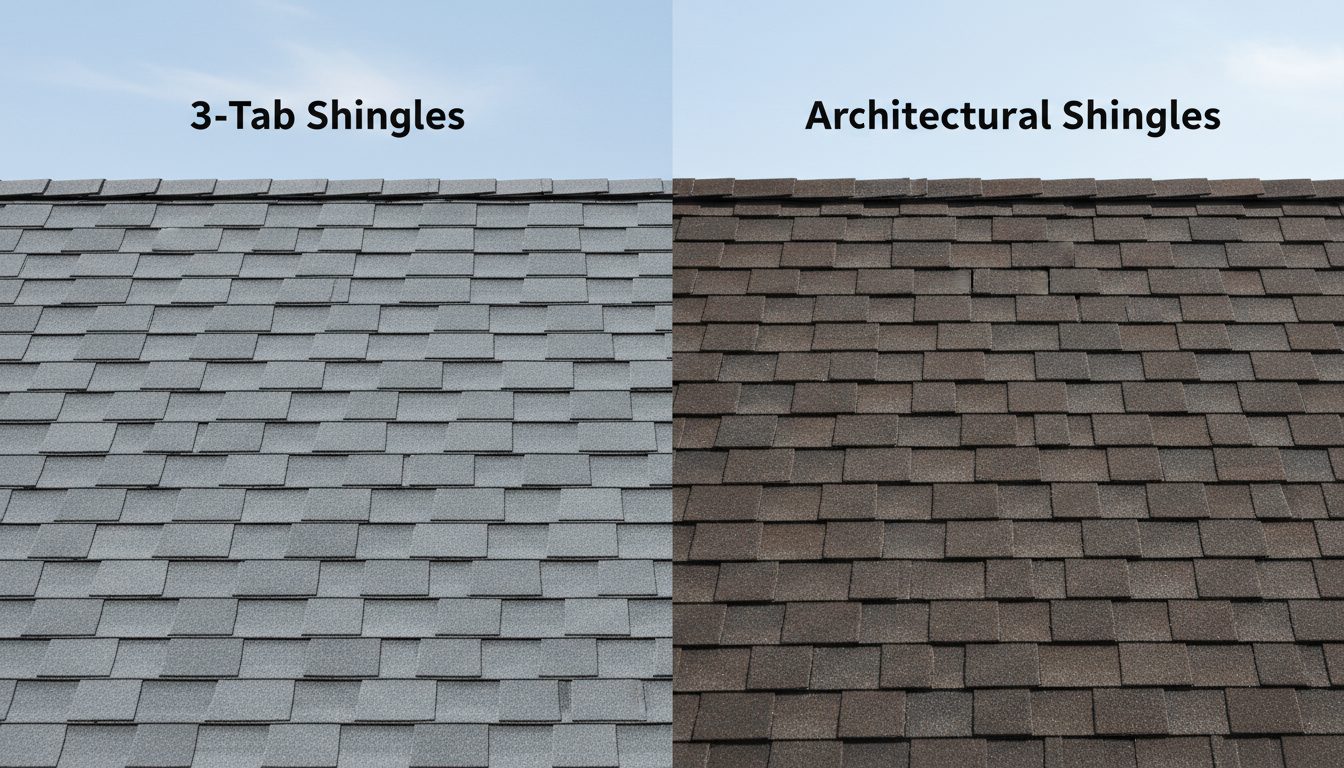
- Choosing the right roofing shingles is one of the most important decisions a homeowner can make. Your roof serves as your home’s primary protection against the elements, and the shingles you choose affect everything from long-term durability and weather resistance to curb appeal and overall property value. When it comes to asphalt shingles. the decision typically comes down to two options: traditional 3-tab shingles or modern architectural shingles.
- At first glance, they might seem similar, but they represent two distinct tiers of performance and aesthetics. A 3-tab shingle offers a classic, uniform look, while an architectural shingle provides a more textured, dimensional appearance.
- This article will provide a comprehensive comparison of architectural roof shingles vs. 3-tab shingles. We will explore the key differences in construction, durability, cost, and appearance to help you make an informed decision that protects your investment and enhances your home for years to come.
- We’ll break down the pros and cons of each, compare them head-to-head on the factors that matter most, and guide you toward the best choice for your budget, climate, and personal style.
Understanding 3-Tab Shingles: The Traditional Choice
For decades, 3-tab asphalt shingles were the standard for residential roofing across North America, and for good reason. They are the quintessential basic asphalt shingle, easily recognizable by their simple, flat appearance. The name itself describes their construction: they are manufactured as a single layer of asphalt-coated fiberglass mat cut to create three distinct tabs of the same size and shape. When installed, they create a repetitive, uniform pattern that gives the roof a very flat, two-dimensional look.
Historically, this traditional roofing option was the go-to for its affordability and straightforward functionality. If you look at homes built between the 1970s and early 2000s, you’ll find that the vast majority were originally roofed with 3-tab shingles. Their key characteristics include a lighter weight compared to other shingle types and standard dimensions, which makes them easy for roofing crews to handle and install.
Advantages of 3-Tab Shingles:
- Affordability: The most significant advantage of 3-tab shingles is their low cost. Both the material cost per square and the installation labor are typically lower than any other asphalt shingle option, making them an attractive choice for homeowners on a tight budget, landlords of rental properties, or those looking for a quick fix before selling.
- Lightweight: Because they are made from a single layer, 3-tab shingles are relatively light. This means they put less stress on your home’s roof structure and are generally suitable for any standard roof without requiring structural reinforcement.
- Simple Installation: The uniform shape and straightforward pattern make installation a familiar and efficient process for most roofing contractors, which can help keep labor costs down.
Disadvantages of 3-Tab Shingles:
- Shorter Lifespan: This is the most critical drawback. 3-tab shingles typically have a lifespan of only 15-20 years. In harsh climates, this can be even shorter.
- Lower Durability: Their single-layer construction and flat profile make them much more susceptible to damage. They have lower wind ratings, often only up to 60-70 mph, and are more likely to be lifted or torn off during a storm. They also offer less resistance to hail and impact damage.
- Less Aesthetic Appeal: The flat, repetitive look is often seen as dated and lacks the visual interest and depth that homeowners now desire. Color and style options are also far more limited compared to their modern counterparts.
- Limited Warranty: Warranties for 3-tab shingles are generally shorter, often covering 20-25 years, and are almost always pro-rated, meaning the coverage value decreases over time.
Understanding Architectural (Dimensional) Shingles: The Modern Upgrade
Architectural shingles, also widely known as dimensional or laminated shingles, represent the next generation of asphalt roofing. They were developed to offer a more premium, durable, and aesthetically pleasing alternative to the standard 3-tab shingle. The key difference between architectural shingles and 3-tab is their construction. Instead of a single flat layer, architectural shingles are made from two or more layers of asphalt-coated fiberglass mat that are laminated together. These layers have tabs of varying shapes and sizes, which are strategically placed to create a rich, textured, three-dimensional appearance that adds depth and character to a roof.
This multi-layer design does more than just look good; it’s the source of their superior performance. The added thickness and weight make these heavy-duty shingles far more robust and resilient. Their varied pattern is specifically designed to mimic the look of natural, high-end roofing materials like wood shakes or slate, but without the high cost and maintenance. This has made them the most popular choice for new roofs and re-roofing projects in recent years.
Advantages of Architectural Shingles:
- Enhanced Durability: The multi-layer, heavy-duty design gives architectural shingles superior resistance to the elements. They boast much higher wind ratings, typically from 110 mph up to 130 mph, making them ideal for areas prone to hurricanes or severe storms. They also stand up better to hail and impact.
- Longer Lifespan: One of the strongest architectural shingle benefits is longevity. You can expect them to last 25-30 years, and many premium lines are rated for 40, 50, or even more years, reducing the frequency of costly roof replacements.
- Superior Aesthetic Appeal: With a vast array of colors, textures, and styles, dimensional shingles dramatically boost a home’s curb appeal. The textured roof look can complement any architectural style, from rustic to modern, making the roof a true design feature.
- Stronger Warranties: Manufacturers stand behind this premium roofing product with longer and more comprehensive warranties. Many offer 30-year, 50-year, or even “lifetime” limited warranties, often with a non-prorated period for the first 10-20 years.
- Increased Home Value: A roof with architectural shingles is seen as a significant upgrade. It not only improves curb appeal but can also increase a home’s resale value, making it a smart long-term investment.
Disadvantages of Architectural Shingles:
- Higher Cost: The primary drawback is the upfront cost. Architectural shingles are more expensive than 3-tab shingles, typically costing 20-40% more for materials and installation.
- Heavier Weight: Being up to 50% heavier than 3-tab shingles, they place a greater load on the roof structure. While most modern homes are built to handle this weight, an older home may require a structural assessment before installation.
- More Complex Installation: While not drastically different, the installation can be slightly more complex due to the varied patterns and heavier weight, which can sometimes translate to marginally higher labor costs.
Head-to-Head Comparison: Key Differences Explained
Now that we’ve defined both options, let’s put them side-by-side to highlight the critical differences. Understanding the difference between architectural and 3 tab shingles across these key categories will empower you to choose the best fit for your specific needs and priorities.
Appearance and Aesthetic Appeal
This is the most immediately noticeable difference. 3-Tab shingles offer a flat, uniform look with a repeating pattern. It’s a simple, functional aesthetic that has been used for decades. In contrast, architectural shingles provide a multi-dimensional, textured appearance that mimics the look of natural materials like slate or wood shakes. This varied look adds significant depth, character, and visual interest, dramatically enhancing a home’s curb appeal.
Durability and Lifespan
When it comes to roof durability, there is a clear winner. The single-layer construction of 3-tab shingles makes them vulnerable to high winds, with wind ratings typically topping out around 60-70 mph. Their average lifespan is about 15-20 years. Architectural shingles, with their laminated, multi-layer design, are significantly tougher. They boast wind ratings of 110-130 mph and offer better resistance to hail and impacts. This robust construction leads to a much longer shingle lifespan, generally 25-30 years or more.
Cost: Materials and Installation
The difference between 3 tab shingles and architectural shingles is stark when it comes to budget. 3-Tab shingles are the economy option. Their material cost is lower, and the installation cost is often cheaper due to their lighter weight and simpler application. Architectural shingles have a higher upfront material cost and can be slightly more expensive to install. However, it’s crucial to consider long-term value. While they cost more initially, their longer lifespan and superior durability mean you may only need to install one architectural roof in the time you would have to replace a 3-tab roof twice.
Weight and Roof Structure Requirements
3-Tab shingles are lightweight and can be installed on virtually any standard roof deck without concern. Architectural shingles are significantly heavier—sometimes up to 50% more. While most homes built to modern code can easily support this weight, it’s a factor to consider for older homes or structures with questionable framing. A professional roofer should always assess the roof’s structural integrity before installing a heavier shingle system.
Warranty Coverage
The warranty comparison further illustrates the quality gap. 3-Tab shingles typically come with a 20 to 25-year limited warranty that is often pro-rated, meaning its coverage value decreases significantly over the years. Architectural shingles almost always feature stronger warranties, such as 30-year, 50-year, or “lifetime” limited warranties. Many of these include a crucial non-prorated period (often 10-20 years) where the manufacturer will cover 100% of material and sometimes labor costs for defects.
Energy Efficiency Considerations
Both shingle types are available in “cool roof” versions that feature special granules to reflect more of the sun’s infrared radiation, helping to keep your attic cooler and reduce energy bills. However, these options are far more common and available in a wider variety of colors and styles within the architectural shingle product lines. Regardless of type, choosing a lighter color shingle over a darker one can also contribute to better energy efficiency.
Which Shingle is Right for Your Home? Making an Informed Decision
Now for the most important question: which shingle should you choose? The answer depends on a careful evaluation of your budget, priorities, and local conditions. This shingle selection guide will help you navigate the decision-making process when choosing between architectural and 3 tab shingles.
Consider Your Budget
Your roofing budget is the most straightforward factor. If upfront cost is your absolute number one priority and you need the most economical solution available, 3-tab shingles are the clear choice. They are perfect for rental properties, budget-conscious flips, or as a temporary solution. However, if you can afford the higher initial cost, architectural shingles represent a much better long-term investment. Their extended lifespan means you’ll spend less on roof replacements over the life of your home.
Evaluate Your Home’s Style and Curb Appeal
Think about the role you want your roof to play in your home’s overall look. If you just need a functional covering and aren’t concerned with aesthetics, the basic look of a 3-tab shingle will suffice. But if you want to boost your home’s curb appeal and make the roof a standout feature, architectural shingles are unmatched. Their dimensional look and wide range of colors can complement any architectural style and significantly enhance your home’s exterior.
Assess Your Local Climate and Weather Conditions
This is a non-negotiable consideration. If you live in an area prone to high winds (like coastal regions or “Tornado Alley”), frequent hailstorms, or heavy snowfall, the superior durability of architectural shingles is not just a luxury—it’s a necessity. Their higher wind rating and better impact resistance provide critical protection that a 3-tab shingle simply cannot match. For homes in very mild, calm climates, a 3-tab shingle might provide adequate protection.
Think About Long-Term Value and Resale
A new roof is a major selling point. Potential buyers and home appraisers recognize the value of a durable, attractive roof. Installing architectural shingles can provide a significant return on investment (ROI) by increasing your home’s perceived and actual value. A home with a brand-new architectural shingle roof is far more appealing than one with an aging 3-tab roof that a buyer knows they’ll have to replace soon.
Consult with a Roofing Professional
Ultimately, the best way to make a final decision is to get expert advice. Contact several reputable, local roofing contractors for inspections and quotes. They can assess the condition of your specific roof structure, recommend products that perform well in your local climate, show you samples, and provide detailed cost breakdowns for both 3-tab asphalt shingles vs architectural options. This professional guidance is invaluable in making a choice you’ll be happy with for decades.
Frequently Asked Questions About Architectural Roof Shingles
Navigating the world of roofing materials can bring up a lot of questions. Here are answers to some of the most common queries homeowners have when comparing 3-tab and architectural shingles.
Can I replace 3-tab shingles with architectural shingles?
A: Absolutely! This is one of the most common roofing upgrades. Because architectural shingles are heavier, your roofing contractor should first inspect your roof deck and framing to ensure it can support the additional weight. In most cases, it’s not an issue for a structurally sound home. Upgrading provides immediate benefits in durability, longevity, and curb appeal.
Are “architectural 3 tab shingles” a real thing?
A: No, this is a common point of confusion, but the term “architectural 3 tab shingles” is a contradiction. They are two distinct and separate types of shingles. “3-tab” refers specifically to the single-layer shingle with three uniform tabs. “Architectural” (or dimensional) refers to the thicker, laminated, multi-layer shingle. You choose one or the other, not a combination of the two.
How do I maintain my asphalt shingles?
A: Maintenance is similar for both types and is key to maximizing their lifespan. You should have your roof inspected annually (especially after major storms), keep your gutters clean to ensure proper water drainage, trim overhanging tree branches to prevent damage and debris buildup, and address any minor repairs like replacing a missing or damaged shingle promptly.
What is the average lifespan of each shingle type in different climates?
A: While we’ve discussed the general lifespans (15-20 years for 3-tab, 25-30+ for architectural), climate plays a huge role. In regions with extreme sun, heavy snow, or frequent storms, both shingle types will have a shorter lifespan than they would in a mild climate. However, the durability gap widens in harsh conditions; an architectural shingle might last 25 years in a tough climate where a 3-tab might only last 12-15 years.
Is the installation process significantly different?
A: The core process is similar—both are installed with roofing nails in an overlapping pattern. However, there are minor differences. 3-tab shingles have a simple, repetitive pattern. Architectural shingles require a slightly different technique to ensure the varied tabs are properly staggered for a natural look and to avoid creating visible patterns or seams. The heavier weight of architectural shingles also makes them more physically demanding to handle and install.
Mesa Arizona
Mesa, Arizona is one of the largest and most vibrant cities in the Phoenix metropolitan area, known for its rich history, diverse communities, and strong sense of local pride. Located in the East Valley, Mesa offers a unique blend of suburban comfort and urban convenience, with easy access to downtown Phoenix, Scottsdale, and Tempe.
With over 300 days of sunshine each year, Mesa’s desert climate supports an active, outdoor-focused lifestyle. Residents enjoy proximity to the Superstition Mountains, Usery Mountain Regional Park, and the Salt River, making hiking, biking, and water recreation popular year-round activities.
Mesa is also home to a thriving arts and culture scene. The Mesa Arts Center—one of the largest arts complexes in the Southwest—anchors the city’s downtown revitalization, alongside local restaurants, shops, and community events. The city places a strong emphasis on education as well, with institutions like Mesa Community College and nearby Arizona State University contributing to workforce development and innovation.
From established neighborhoods to growing new developments, Mesa continues to attract families, professionals, and retirees alike. Its combination of affordability, economic growth, and quality of life makes Mesa a desirable place to live, work, and invest.

Dwell Roof is a Mesa-based home improvement and general contracting company serving the Greater Phoenix area, including Mesa, Scottsdale, Gilbert, Tempe, Chandler, Queen Creek, and surrounding communities.
What They Offer
Dwell Roof provides a broad range of residential and commercial services designed to protect, enhance, and improve homes and buildings, with a focus on durability, comfort, and energy efficiency:
- Roofing services — inspections, repairs, and full replacements tailored to Arizona’s climate and weather conditions.
- HVAC installation and service — heating, ventilation, and air conditioning solutions to improve indoor comfort and energy performance.
- Solar panel installation — solar energy systems to help lower electricity costs.
- Windows & insulation — upgrades for better energy efficiency, reduced utility bills, and improved comfort.
- Home inspections — comprehensive evaluations that identify roofing, HVAC, insulation, and window issues with same-day reporting.
- General remodels and additional “home solutions” such as door installations and other improvements.
Location & Contact Info
- Based in Mesa, Arizona, with service coverage across the Phoenix metro area.
- Phone: (480) 454-6002
- They emphasize responsiveness and customer support, including emergency service availability.